

Scaling a financial advisory practice can feel like the classic chicken and egg paradox. You need to add more clients to increase revenue, but to serve those clients you feel you must spend more money on staff, technology, and other resources. Sometimes it’s a capacity issue, and you feel like you need to add staff before you can even consider scaling, lest you find yourself working unsustainable hours. In many cases, this is a false dilemma, as there are many things an advisor can do to improve capacity and tap into scalable resources without making huge investments of time or money.
Nail Down Processes
The first step toward scaling efficiently and profitably is to nail down your processes. Often advisors are losing time and money with inconsistent and inefficient procedures (or lack of procedures). Having clearly defined, repeatable processes ensures that you are able to deliver the same experience to clients every time. Often, processes help you save time, money, and mental energy, allowing you to do more with less. There is no need to waste a lot of time for no reason when many other advisors and practice management experts have already developed proven systems and processes that you can apply and customize to your own practice.
Leverage A Teams Approach
If you are a solo advisor, the path to scaling your practice often entails teaming up with other advisors to share resources. A single advisor can’t provide enough work to support a full-time staff member, but two or more advisors together can pool their resources to hire and retain a dedicated staff member to serve their needs. The same is true of sharing office space, equipment, and other tools. There is also a natural knowledge sharing that happens as you share lessons learned, best practices, connections, and other resources. This gives you many of the advantages of an enterprise level practice while still maintaining the freedom and flexibility of a solo practice.
Outsource Support Services
Often, you can add the capabilities of another staff member without taking on the responsibility of an employee by outsourcing certain tasks and functions to qualified third parties. Things like client meeting prep, financial planning, CRM management, and other critical tasks can be done by a franchise consultant. You only pay for the services you use and often services cost a fraction of the cost of adding that service in-house. Plus, you get to maintain total control over the delivery of client facing services.
Monitor and Eliminate or Renegotiate
Over time, technologies change, your practice evolves and your needs change, or you may simply find that something that seemed useful really isn’t delivering. As you scale, you must constantly monitor and evaluate all expenses and determine what has become obsolete, what isn’t living up to its promise, and what needs to be renegotiated or upgraded. Many times, a business can fall victim to the “set it and forget it” subscription models that can slowly eat away at your balance sheet. It’s also important to not overcommit to new expenses. Many technologies will offer deep discounts for multiyear commitments, but until the tool has proven itself useful it’s best to either purchase month to month for a trial period, or just a few months if a discount is attractive enough. Try to negotiate in deal terms for early cancellations should the technology or service prove unnecessary or not as useful as you had hoped.
When looking to scale your practice, don’t fall victim to the mentality that “you have to spend money to make money.” Yes smart, strategic investments in proven systems, processes, and services can help you scale rapidly and efficiently. However, scaling does not always mean hiring full time staff, purchasing big subscriptions, or other high-dollar expenses. With some due diligence and the right resources, you can scale your practice with little up-front investment.
Share This Post
Subscribe to Keys to Success
Receive timely articles and news on upcoming webinars and events by subscribing Keys to Success.
For articles and white papers on acquisitions and successions, please go to our sister site Advisor Legacy.
Related Posts
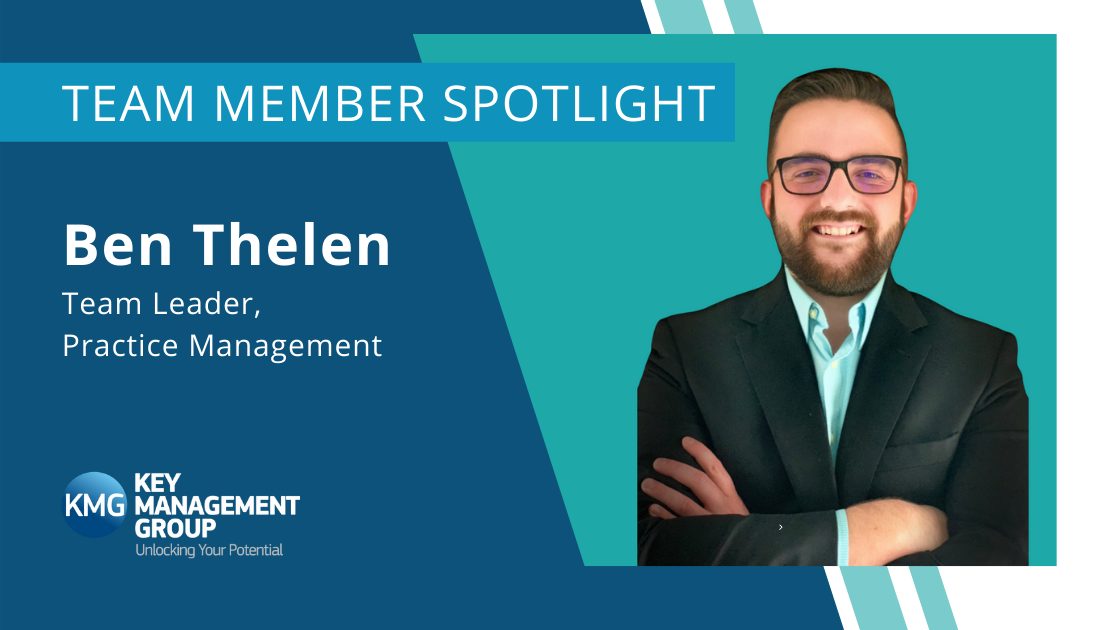
This blog post is part of a series highlighting Key Management Group team members.
Ben Thelen joined Key Management Group as a Practice Management Coach but was soon applying his background as an advisor and his degree in Business Administration to solve even bigger problems for our clients. Now he serves […]

As all sectors of the economy struggle to find and retain talent, advisors are looking at ways to stay ahead of the great resignation trend and keep their staff on board. Many factors are leading employees to resign in record numbers. For the most part, the financial advisor industry has stayed ahead of the curve, […]

As 2021 comes to a close, we wanted to take a moment to reflect back on the year and how it has impacted the financial advisor industry. Despite a continued pandemic, supply chain woes, and rising inflation, advisors not only survived but thrived and emerged as a trusted and valued resource for clients. Advisors also […]

It’s always exciting bringing on a new team member. Whether adding a new position and growing your team, or replacing someone who has left, the new person represents possibility for the future and a hope that the practice is moving in the right direction. Unfortunately, that excitement can quickly fade if certain steps aren’t taken […]

